
It is difficult—but important—to remember what is forgotten to you
A nervous fit at the gay bar stirs a spiral of introspection

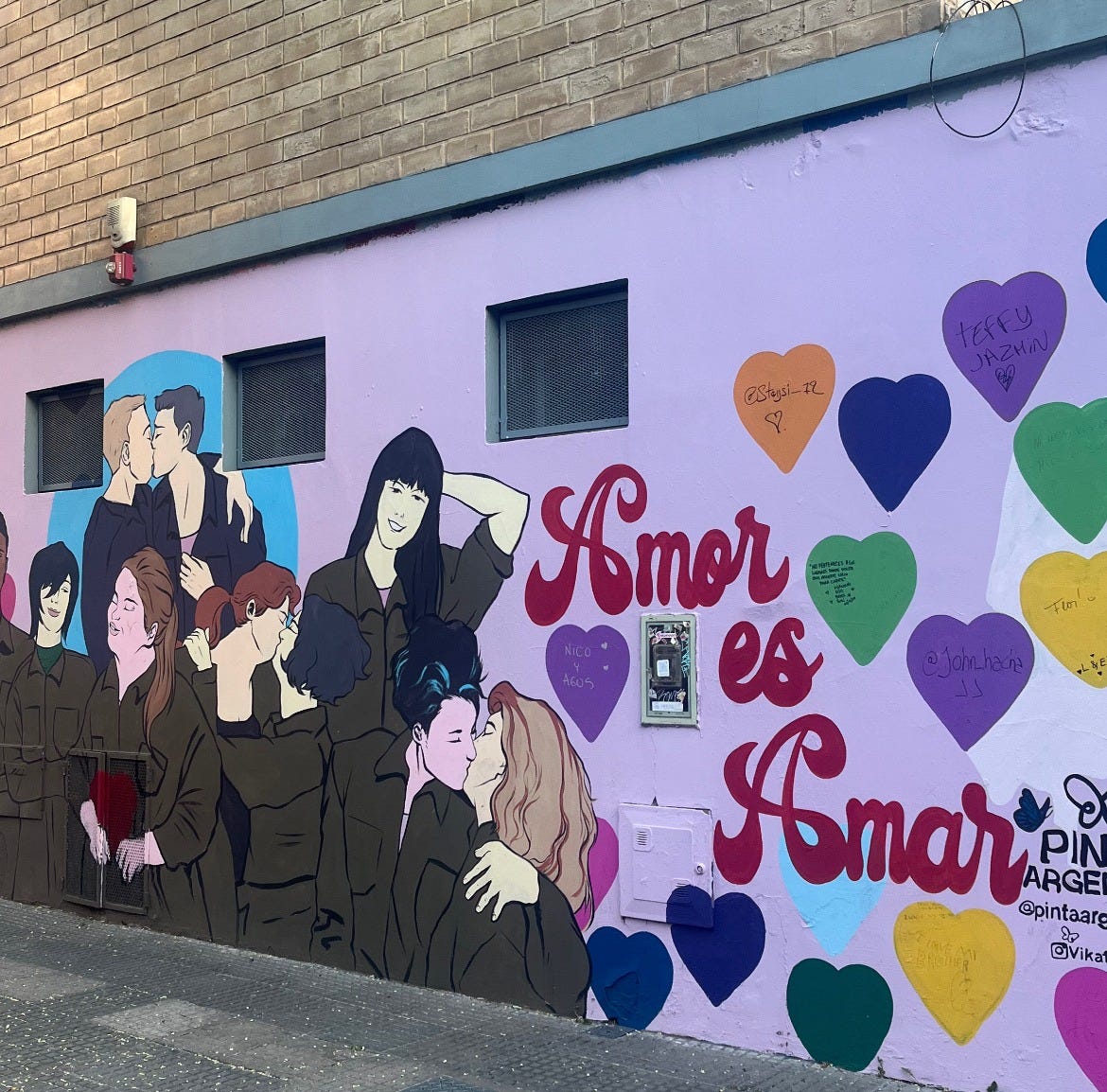
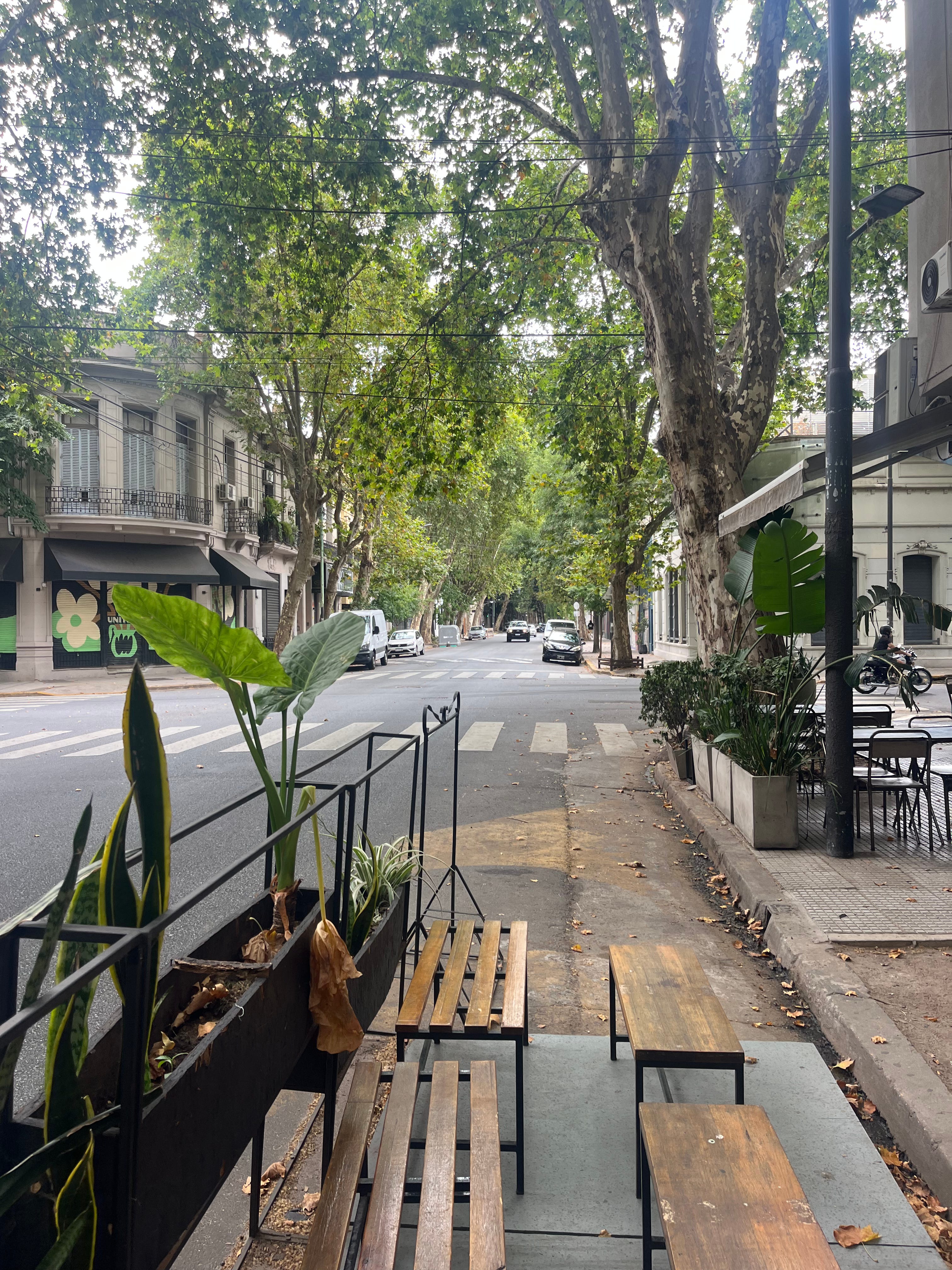
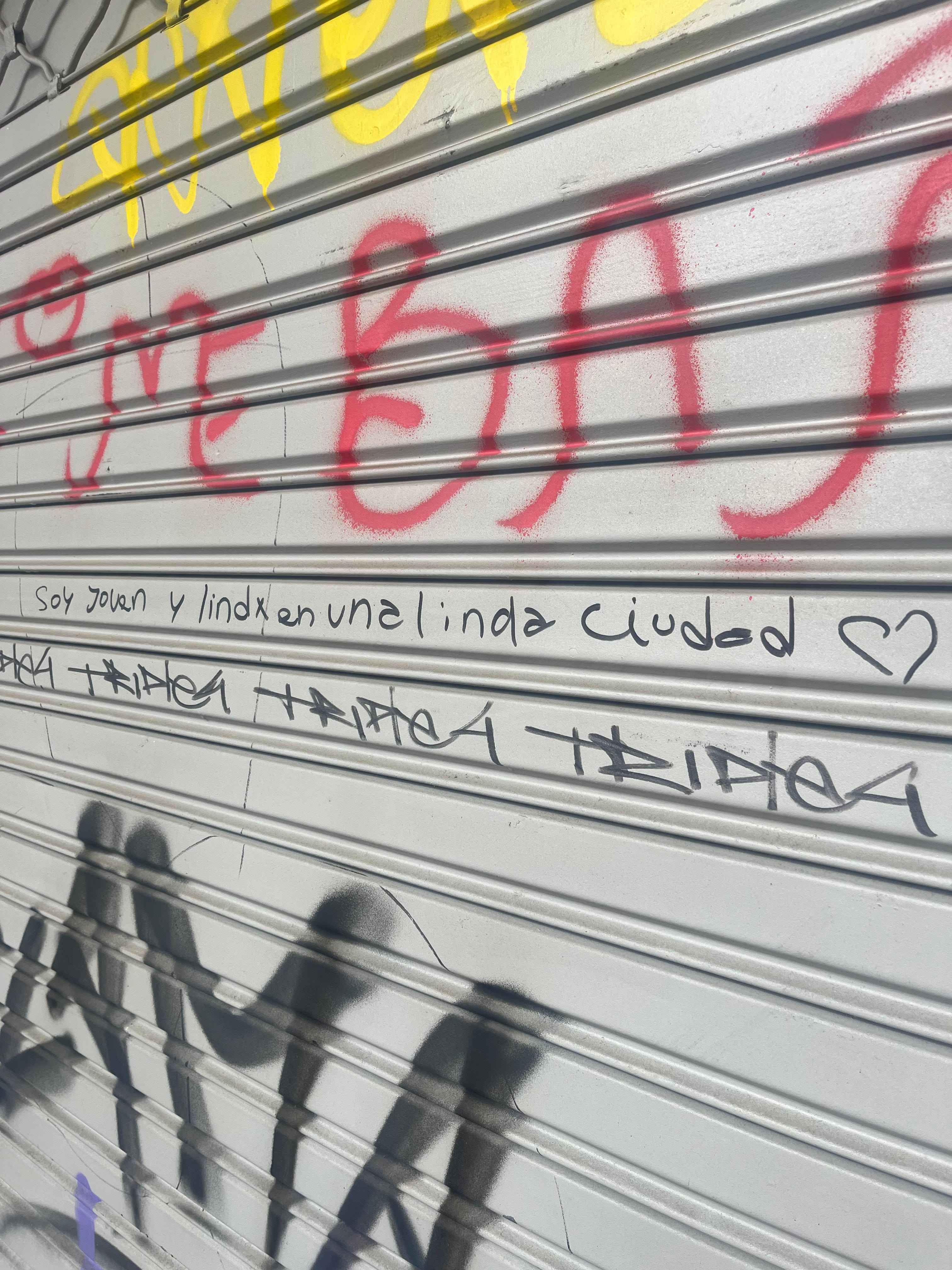
Summer nights in Buenos Aires are hot. That's the first thing I notice as I leave dinner with a bunch of strangers and walk to the gay bar half a block from my temporary lodgings. I’ve been in Buenos Aires for two days; someone on Grindr invited me to dinner on Friday with a few other gays, so I went. And now we were walking to the bar, through Palermo's cobblestoned streets and past colorful walls painted with art and graffiti, decorated with ivy and shaded by leafy trees. It would rain later in the weekend, not tonight like we'd originally thought, and even the wind we'd felt at dinner on the terrace had finished exhaling long ago; we were charged with friction, eager to pounce on the boys, to meet new friends.
The gay bar. If you've never been, know that it's both the best and worst place to go. There are few other places where you can let the mask drop and be a faggot, to celebrate the joy of being queer in a space of other queers.1
This was a real neighborhood bar—or, it would be, were Palermo not so filled with foreigners. Much like La Condesa in Mexico City or the 5ème arrondissement in Paris near the Seine, the majority of the tables at this bar spoke languages other than Spanish. The prices here were higher than I'd seen elsewhere, too—more expensive than I would have paid at a similar establishment in an American city like Pittsburgh. It had an American-sized menu, too, and I was so overwhelmed with the options that I ordered a pisco sour—I had just come from Perú, and maybe this was a gesture that betrayed an uneasiness in me I had yet to recognize.
One of our group—the one who didn't drink, ironically—saw some guys he knew and so we encircled their table and introduced ourselves. This group of friends—three Americans and two Argentines, one of whom was living in Spain—had mostly just met the prior weekend. Two of the Americans were twins: one from New York, the other from Chicago. And they were so American—loud, boisterous, joyful, magnetic, curious, guileless, temerous.
And I felt so detached, the way I feel now as I type this, the trembling in my interdigits that pulse as my heart, the twisting of the base of my throat, the tightening of my chest that pulls my shoulders forward to a collapse.
…I used to be like that. Bold. Vivacious. Garrulous. And effortlessly so. I used to have no trouble going up to boys who were pretty—perhaps because I thought I was pretty, too. But not so anymore.
But the next morning, ordering a coffee in today's viscous Spanish—I got that tightening malaise in my sternum, in my lower neck, the hinge of my jaw, between my shoulders—
Am I just an anxious person now? When did this happen?
…I spoke, quite recently, with somebody who was forthcoming about their anxiety. And yet I was unable to make the same generous offer.
I think often of the thought experiment called the Ship of Theseus. It goes like this: the Greeks decide to repair Theseus's ship, and so they replace one plank every day. After all the planks have been replaced, is it still the same ship?
I cannot deny that the ship is physically different, but is there some kind of intrinsic ship of Theseusness to it that remains?
Am I the same Jake who used to queen out at the gay bar without hesitation? Or have I transformed?
I have two more questions: is this transformation reversible? And despite being different, am I not still the same me? Just as the potential for timidity exists within me, so too does that for temerity. We are not ships or caterpillars undergoing irreversible transformations: we are instead travelers on a city block, free to go whichever direction we desire.
But this reckoning isn't as simple as deciding that I want to “stop being this person.” Just as you have lost something and must find it again, so too must you lose something else to keep it. Such ruthlessness is the inventory management of a personality.
My chat with one of the twins ends and someone new approaches to grab his attention, so I take the opportunity to retreat and speak with someone else. I recognize, now, my feelings as those of feeling threatened.
But why?
Perhaps because I have run into myself—because all I can see in other people tonight is myself. Or the me that could have been, that never was, the me that had I made different choices would have been more similar to this person I was speaking with. A potential me that could still emerge, with many of the traits I desire but which I perceive to lack in myself.
And so I alight on that fatal flaw of mine and so many others: comparison.
That night, at the same table, I met someone else, who I had dinner with again last night, now a week later. He and I were similar in many ways: we grew up across state lines but half an hour from each other. We'd both lived in New York City. Both worked at startups. Followed similar online niche creators. Both had a passion for travel and languages. But just as there were things I wanted to learn from him, I noticed—quite conceited of me, noticing things about myself as I speak about another; perhaps this is what Calvino meant when Marco Polo said Every time I describe a city I am saying something about Venice2—that there were things about me, maybe, that he wanted to learn from, too.
Comparison is an addiction to losing. It is the bandit who sneaks into your mind as you doomscroll through all the beautiful boys in front of you you're too shy to talk to and steals your delight.
I do not know when I began to allow myself to operate like this, how I lost my sense of self so much that I could be impacted merely by seeing another. But surely I am not the only one capable of such astonishing neglect.
How does one recover from an addiction to losing? I don't know, but the poet Jack Gilbert might have an answer:
“We must risk delight. We can do without pleasure, but not delight. Not enjoyment. We must have the stubbornness to accept our gladness in the ruthless furnace of this world."
We must show up anyway.
The twins reached out to me the next day, and the days after, and asked what I was doing. Many other people I met that night have done the same. My only regret is that I allowed my shyness to impede me to the extent it did.
And yet, I fear how easy it is to submit to timidity. To choose the familiar and comfortable over the unknown and exciting. I am already in a foreign country, operating under the consistent friction that navigating the city in a second language—even if it's a second language I feel quite capable in—necesitates. I wonder, had I decided not to go out at any point, how my time here would have been shaped. It would have been much, much lonelier.

It has been a season of change: I recently turned 30, the Gregorian calendar just turned and in a few days we will enter the Year of the Snake. The political climate in the United States has tumbled. I am in a new country, meeting many people who are living a life I used to want yet turned away from but now find myself increasingly enticed by. Change is always a challenge, as it requires being different from who you perceive yourself to be. Even moreso when, I think, you have to remember something you've forgotten.
I've done much of the work of showing up—I am here, even if I am finding that instead of running away from the winter in New York I was running towards the summer in Buenos Aires.
But so often when we are running away from one thing, we find we are, accidentally, delightfully, running toward something else.
That we are running at all is an essential evidence of our stubbornness.
Highly recommend reading Jeremy Atherton Lin's memoir Gay Bar.
In Le città invisibili (Invisible Cities)
Loved this essay, well done Jake! It is such a relatable feeling, how sometimes we approach social interactions from a place of abundance and excitement and other times from insecurity or competition. It sort of reminds me of the nervous system and being in a ventral vagal state versus a sympathetic state. Really thought provoking and beautifully written!
Jake, this was so powerful and so relatable — and not just because I live in Buenos Aires and I know the twins, and the unusually expensive and expat-heavy gay bar, that you're mentioning! If you're still in town, let’s grab coffee sometime.